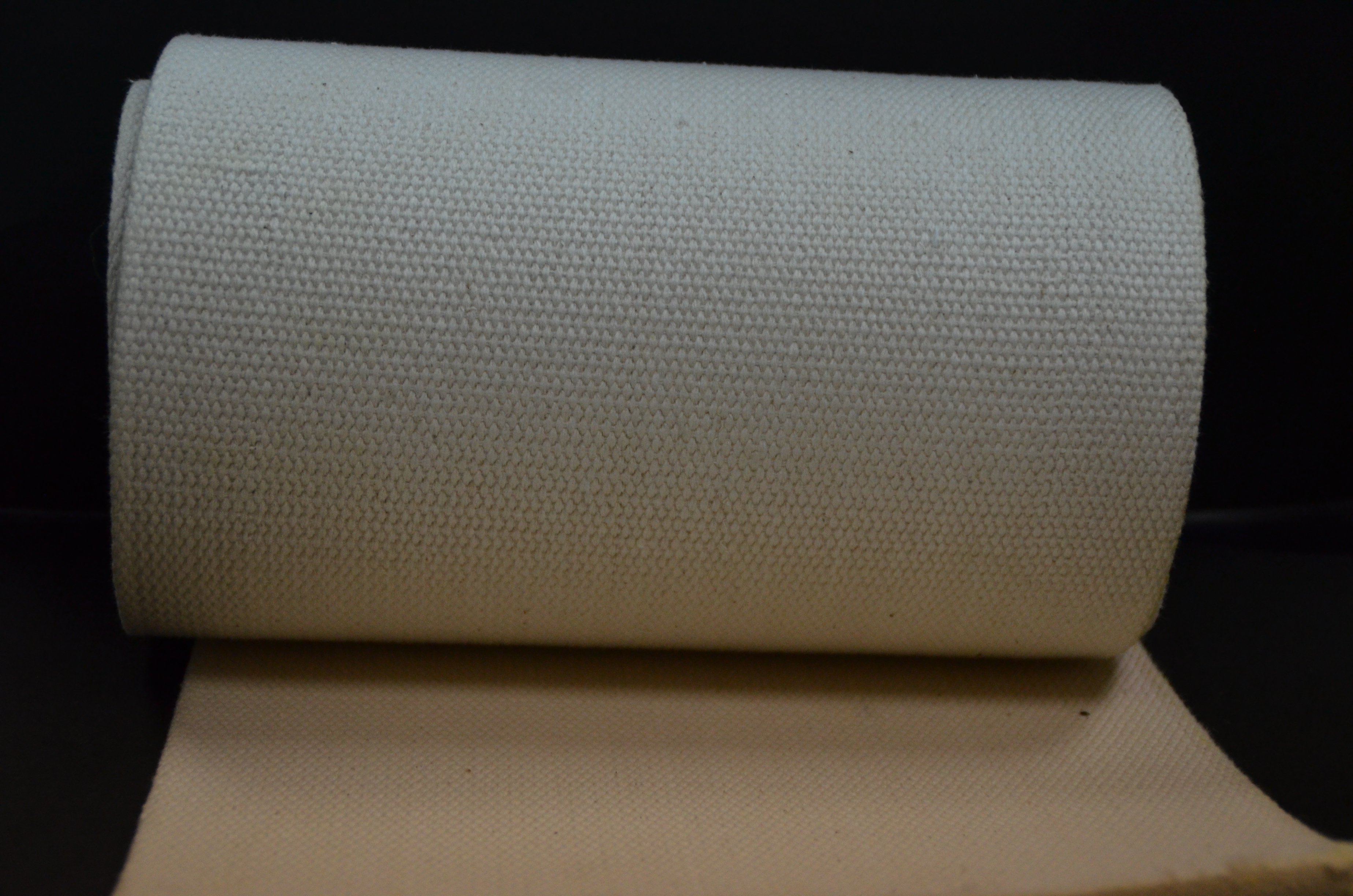
Solid woven cotton belts give a soft, stable textile surface for flour milling equipment, bakery and biscuit lines, grain handling and light to medium conveying. When a belt wears out, the fastest way to a correct replacement is a clear specification. Here is what we need.
1. Width
Give the required belt width, or the maximum width the equipment allows. We weave up to 2500 mm wide.
2. Ply and thickness
Thickness ranges from 1.5 to 10 mm. For common belts, ply count is the easiest reference:
| Ply | Approx. thickness | Typical use |
|---|---|---|
| 2 ply | approx. 3 mm | Light conveying and replacement maintenance |
| 3 ply | approx. 4 mm | Common flour mill and bakery line use |
| 4 ply | approx. 5 mm | Heavier conveying and custom needs |
Ply and thickness are approximate references. The final specification is confirmed from your sample, drawing or working conditions.
3. Roll length or endless size
Standard rolls are 50 m or 100 m. If the belt runs endless on your machine, give the endless length so the joint can be discussed.
4. Edges and joints
Standard belts have 2×weave edges, which keep a clean textile edge during handling and installation. Tell us if you need a treated edge, a fixed open length or an endless joint.
5. Application and special requirements
Tell us what the belt carries — flour, grain, bakery products or packaged goods. The belt can also be used as an elevator belt after coating by the customer. Requirements such as FDA, oil resistance, antistatic properties or an exact temperature rating must be confirmed separately for each order.
Quick checklist
- Width (or maximum equipment width)
- Target ply or thickness, or an old belt sample
- 50 m / 100 m roll, or endless length
- Edge and joint requirement
- Material conveyed and application
- Photos, samples or equipment drawings